
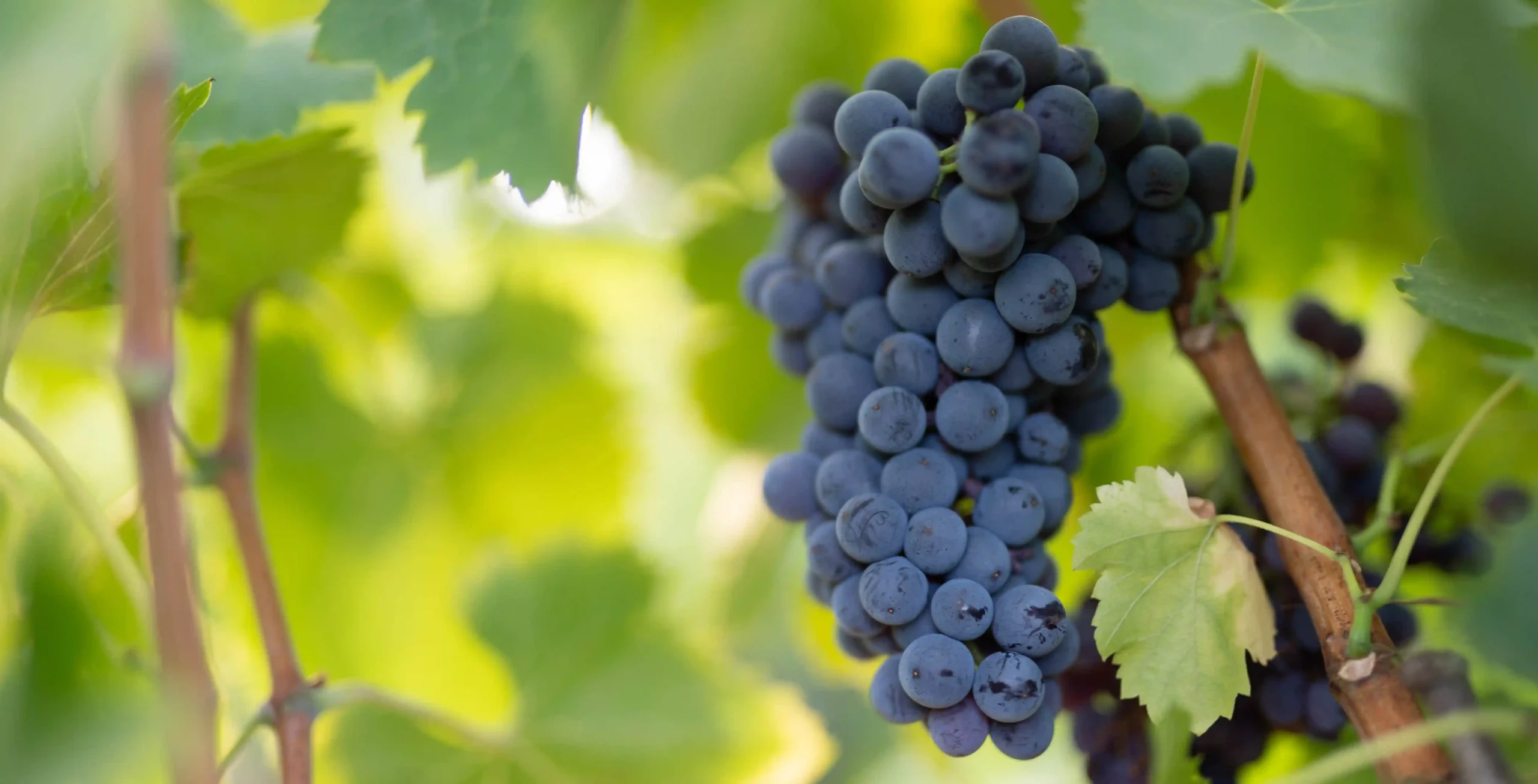
The grape varieties of the Ardèche: the ones that give Les Garidelles wines their character
Behind every bottle lies a story of terroir, climate… but also of grape varieties. It is these that give the wine much of its personality: its freshness, structure, aromas and colour. At Les Garidelles estate, we grow nine grape varieties that thrive on our terroir in the south of the Ardèche. From Viognier to Syrah, via Grenache and Plant de Brunel, each contributes to the identity of our wines. How do these grape varieties shape our wines?
Why are grape varieties so important in wine?
A grape variety is the type of grape used to make a wine. It is this variety that largely shapes the wine’s identity: its aromas, colour, structure, freshness and ageing potential. A Viognier will express floral and fruity notes, whilst a Syrah will reveal more black fruit and spice.
But a grape variety never expresses itself in isolation. The terroir, the climate, the aspect of the vineyards and the winemaker’s expertise also play a vital role. The same grape variety grown in two different regions can produce wines with very different profiles.
At Les Garidelles, some wines showcase a single grape variety, allowing its full personality to shine through. Others are blends, where several grape varieties complement one another to offer greater complexity and balance. This diversity enables us to offer a varied range of wines, in which each cuvée has its own distinct identity.
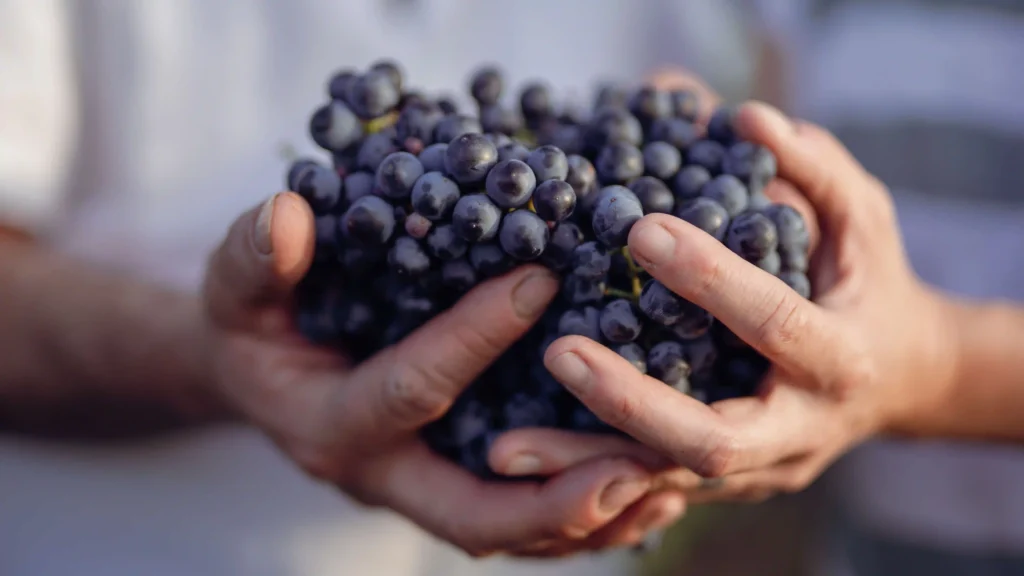
The three white grape varieties grown at Les Garidelles
viognier
Viognier is an iconic grape variety of the northern Rhône Valley, where it has been grown for several centuries, particularly around Condrieu. After experiencing a sharp decline during the 20th century, it has regained its place thanks to the efforts of winegrowers who have succeeded in bringing out its full potential. Today, it has become widely established in the south of France, where it finds ideal conditions to express its full richness.
In the Ardèche, Viognier thrives particularly well in well-exposed terroirs that encourage slow and steady ripening of the grapes. It then develops generous aromas of apricot, peach and white flowers. On the palate, it captivates with its roundness, balance and beautiful aromatic expression.
At the Les Garidelles estate, Viognier has a very special history. Sébastien’s grandfather, Paul, was one of the first winegrowers to plant Viognier in southern Ardèche, thereby helping to establish this grape variety in the local vineyards. Even today, these vineyards enable the estate to offer two very different expressions of Viognier.
With ‘Suzette’, the grape variety is vinified on its own from a plot-selection of vines aged around 50 years, planted on a clay-limestone terroir. The low yields encourage a high concentration in the grapes, resulting in a full-bodied and generous wine, characterised by aromas of peach and apricot
sauvignon
Originating in south-western France, Sauvignon Blanc has established itself over the centuries as one of France’s great white grape varieties, thanks in particular to the wines of the Loire Valley. In the Ardèche, it has found a terroir where it expresses itself with great finesse. The clay-limestone soils, combined with the sunny climate of the southern part of the department and cooler nights during the harvest, allow it to retain all its aromatic richness and liveliness. It thus develops notes of citrus and white flowers, whilst offering lovely tension on the palate.
At the Les Garidelles estate, Sauvignon is grown on deep clay-limestone soils, but expresses itself in two very distinct ways.
In ‘Marcel’, it is blended with Viognier, accounting for 40 per cent of the blend. Harvested at dawn to preserve their full freshness, the two grape varieties are vinified separately before being blended at the end of fermentation. Here, the Sauvignon contributes its liveliness, tension and slightly tart notes, which perfectly balance the richness of the Viognier.
With Simone, the Sauvignon takes centre stage this time. Sourced from a single plot, it is vinified on its own to fully express its character. After selecting the free-run juice and the first pressings, fermentation takes place in underground concrete vats, followed by ageing on lees. This winemaking process lends the wine greater depth and complexity, whilst retaining the notes of white flowers, pear and citrus that define its identity.
Through Marcel and Simone, Sauvignon Blanc demonstrates that a single grape variety can reveal very different facets. The blend, plot selection and winemaking choices play just as important a role as the grape variety itself in shaping the wine’s personality.
chardonnay
Originally from Burgundy, Chardonnay is now one of the most widely grown white grape varieties in the world. Its ability to adapt to a wide variety of terroirs means it can produce very different styles, ranging from fresh, mineral-driven wines to rounder, more generous cuvées. In the Ardèche, it thrives particularly well on clay-limestone soils and is one of the iconic grape varieties of the Ardèche PGI.
Chardonnay has been grown at the estate for several years. However, the first vines were planted with a simple aim: to wait until they reached full maturity before dedicating a cuvée to them. We chose to be patient so that the vines could develop their full depth and balance, for a good wine is born in the vineyard.
That wait is now drawing to a close. The vines are gradually reaching the age at which they will be able to express their full potential, and a first vintage of Chardonnay from Les Garidelles should soon be released. This marks a new chapter in the estate’s history, enriching our range with a white wine that remains true to our philosophy: prioritising quality over haste.
Red grape varieties
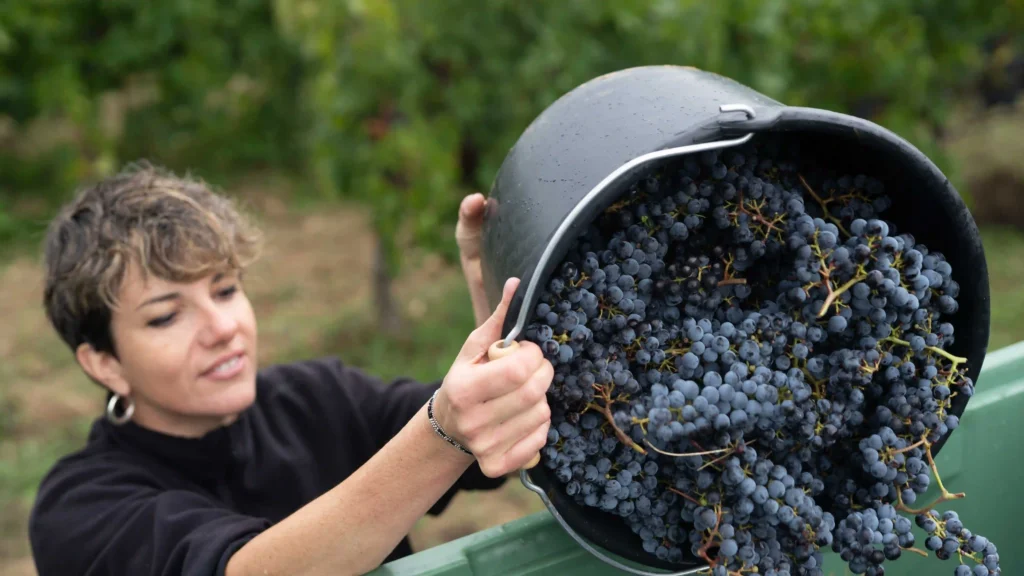
merlot
Originally from the Bordeaux region, Merlot is now one of the most widely grown red grape varieties in the world. Prised for its roundness, generous fruitiness and supple tannins, it develops aromas of cherry, plum, blackcurrant and even slightly jammy fruit when the grapes reach full ripeness. In the Ardèche, it takes full advantage of the sunny climate to produce wines that are both rich and elegant.
At our estate, Merlot is vinified using two very different approaches, resulting in two cuvées that each reveal a different facet of this grape variety.
With ‘Charles’, the aim is to preserve all the freshness and vibrancy of the fruit. The grapes are harvested exclusively by hand to keep the bunches whole, an essential requirement for carbonic maceration. This winemaking method produces a particularly supple Merlot with well-integrated tannins, where aromas of damson, liquorice and tobacco come through with great richness. A distinctive feature of this cuvée is that no sulphites are added from harvest through to bottling, allowing the fruit to express itself as naturally as possible.
With Paul, the approach is different. It all begins in the vineyard, with a rigorous plot-by-plot selection aimed at bringing the Merlot to optimal ripeness. This process helps to avoid the vegetal notes sometimes associated with this grape variety and emphasises ripe, harmonious fruit. After three weeks’ maceration in underground concrete vats, only the finest fractions of the wine are retained, without being returned to the presses. The result is a full-bodied, structured and balanced Merlot, with an ageing potential of around ten years.
Through Charles and Paul, Merlot demonstrates that a single grape variety can offer two very different personalities. Depending on the choices made in the vineyard and in the cellar, it can offer immediate enjoyment or reveal its full depth over the years.
Syrah: a daughter of the Ardèche
Few grape varieties have such a strong connection with the Ardèche as Syrah. Long shrouded in legend, its origin is now well understood thanks to genetic analysis: it arose from a natural cross between Dureza, an ancient Ardèche grape variety that is now very rare, and Mondeuse Blanche, which originates from Savoie (https://www.vins-rhone.com/fr/syrah). This heritage makes Syrah one of the most iconic grape varieties of the Rhône Valley and a natural choice for Ardèche winegrowers. On our estate, this history takes on a family dimension: Paul, Sébastien’s grandfather, was one of the first winegrowers to plant Syrah in the southern Ardèche, helping to establish the variety in the region.
We grow Syrah on deep clay-limestone soils, where it develops aromas of red and black fruits, enhanced by a characteristic peppery note. Depending on the winemaking method and blend, it can express a variety of personalities.
In Raymond, our rosé, Syrah is blended in equal parts with Plant de Brunel. Harvested at dawn to preserve their full freshness, the grapes are pressed immediately after being transported solely by gravity. Here, the Syrah brings all its liveliness, delicious notes of redcurrant and a lovely aromatic intensity, whilst the Plant de Brunel adds roundness and length on the palate.
In ‘René’, it is blended with Grenache to create a well-balanced wine. The finest plots of both grape varieties are vinified together in underground concrete vats, using a very gentle extraction process that favours infusion over intensity. The Syrah contributes its structure, delicate notes of black pepper and a lovely freshness, whilst the Grenache expresses its full fruitiness. The result is a light and particularly delicious red wine.
Through Raymond and René, Syrah demonstrates its full versatility. At times fresh and vibrant in a rosé, at others subtly spicy in a red, it reveals the richness of this grape variety, which is intimately linked to the wine-growing history of the Ardèche.
Grenache: a Mediterranean grape variety
Originally from Spain, where it is known as Garnacha, Grenache gradually became established throughout the Mediterranean region before becoming one of the iconic grape varieties of the southern Rhône Valley. Thriving in hot, dry climates, we love its generosity, its red fruit aromas, its roundness and its ability to produce both great reds and beautifully elegant rosés.
With Louise, it shines on its own in a 100% Grenache made from 40-year-old vines. Harvested at dawn to preserve their full freshness, the grapes are pressed immediately following a rigorous selection of the first juices to avoid any tannic harshness. Fermentation in underground concrete vats produces a rosé of great delicacy, with a very pale colour, expressing notes of white peach and muscat, carried by a round and airy palate.
In René, Grenache is blended in equal parts with Syrah. The finest plots of both grape varieties are vinified together in concrete vats, using a gentle method that favours maceration and minimises pumping over. Here, the Grenache contributes its rich fruitiness and roundness.
Grenache is also present in our red BIBs, where it comes from younger vines, around fifteen years old. More spirited and fruit-driven, it brings richness, suppleness and a lovely freshness to these wines, designed for moments of sharing.
The Brunel vine: a rare grape variety from the Ardèche’s wine heritage.
The Brunel vine is a little-known grape variety that forms part of the Ardèche’s wine-growing heritage. It is the result of a natural, spontaneous cross between Grenache and Jurançon Noir, which appeared by chance in a vineyard plot. In the early 1980s, the Ardèche nurseryman Léon Brunel recognised the potential of this unusual vine. After several years of observation and experimentation, he secured its inclusion in the Official Catalogue of Vine Varieties, thereby giving his name to this grape variety, which remains very rare to this day. Hardy and generous, it produces wines that are deep in colour, well-structured and with aromas of ripe fruit.
At Les Garidelles, the Brunel vine is a recent planting, undertaken with the aim of preserving and promoting this local wine-growing heritage. Grown on ancient alluvial soils, it finds a terroir that allows it to express its full character.
It features in ‘Raymond’, where it is blended in equal parts with Syrah. The Syrah brings lovely freshness, tension and notes of redcurrant, whilst the Plant de Brunel balances this liveliness by offering greater roundness, body and a delicate hint of English toffee that defines the cuvée’s identity. The grapes are harvested at dawn to preserve their full aromatic richness, before being pressed directly and vinified gently.
Through ‘Raymond’, Brunel’s vineyard demonstrates the estate’s commitment to preserving rare grape varieties that contribute to the Ardèche’s wine-growing identity.
Marselan: a grape variety with a promising future
Created in 1961 in Marseillan, in the Hérault department, by the researcher Paul Truel, Marselan is a cross between Cabernet Sauvignon and Grenache Noir. Designed to combine the aromatic finesse of the former with the richness and hardiness of the latter, it quickly established itself in the vineyards of southern France. It is now one of the recognised grape varieties of the Ardèche PGI, as it is well suited to Mediterranean climates and drought.
At the estate, the first Marselan vines were planted around twenty years ago on the estate’s deep clay-limestone soils. It is found mainly in ‘Désirée’, where it forms the majority (60 per cent) alongside Cabernet Sauvignon. Harvested at perfect ripeness, the two grape varieties are macerated for thirty days before the Cabernet undergoes partial barrel ageing, resulting in a wine with ageing potential, featuring aromas of black fruits with a hint of menthol, a balanced structure and lovely complexity.
Marselan is also present in our red BIB, where it is blended with Merlot. Vinified in underground concrete vats without pumping to preserve the fruit’s purity, it brings colour, richness and roundness to this approachable wine.
cabernet-sauvignon
Native to the Bordeaux region, Cabernet Sauvignon is the result of a natural cross between Cabernet Franc and Sauvignon Blanc, as identified by genetic analyses carried out by the University of California, Davis, in 1997. Renowned for its structure, ageing potential and aromas of blackcurrant, dark fruits and violets, it has gradually become established in many French wine-growing regions, including the Ardèche. On the clay-limestone terroirs of the southern part of the department, it develops excellent ripeness whilst retaining freshness and elegance.
We grow Cabernet Sauvignon on deep clay-limestone soils, and it forms part of Désirée, the estate’s first cuvée. Blended with 60 per cent Marselan, it brings finesse, structure and aromatic complexity. The grapes, harvested at perfect ripeness, macerate for thirty days before part of the Cabernet is aged for eight months in oak barrels. It then develops elegant vegetal and violet notes that complement the black fruit aromas and the rich, luscious character of the Marselan. The result is a balanced wine with ageing potential, both powerful and harmonious.
Through ‘Désirée’, Cabernet Sauvignon demonstrates that it can flourish fully in the Ardèche climate when paired with a Mediterranean grape variety such as Marselan. Together, they produce a cuvée that combines depth, freshness and ageing potential.
Is the grape variety more important than the terroir when it comes to making wine?
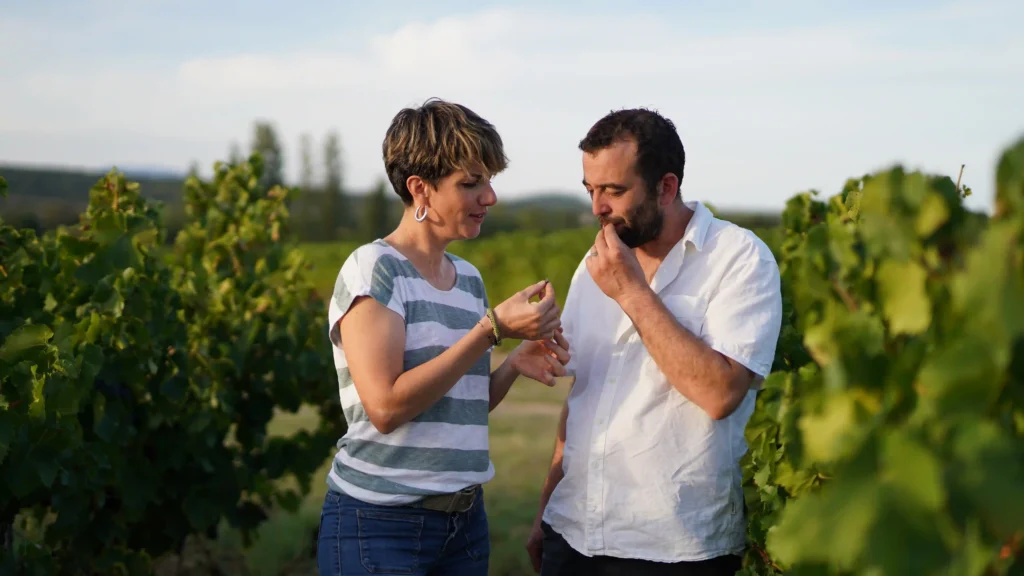
The answer is no… or rather, not on its own.
The grape variety contributes an aromatic identity. Viognier will often evoke apricot or peach, Syrah its peppery notes, Sauvignon its freshness, and Grenache its generous fruitiness. But these characteristics are merely a starting point.
The terroir, the age of the vines, the climate of the year, yields, the harvest date and winemaking choices profoundly transform the expression of the same grape variety. This explains why two Viogniers or two Syrahs can be very different.
We grow our grape varieties across three terroirs: sandstone, clay-limestone soils and ancient alluvial deposits. Added to this are the ages of the plots – some of which are over fifty years old – as well as winemaking techniques designed to best respect each vintage rather than impose a single style.
It is this combination of grape variety, terroir and the winemaker’s expertise that gives each cuvée its identity. Ultimately, a grape variety never expresses itself in isolation. It is a form of dialogue – a dialogue with the terroir, the climate and the winemaker.
Come and discover these grape varieties at the vineyard!
Reading about the characteristics of a grape variety helps you to better understand a wine. But it is by tasting it, right in the heart of the vineyard where it is grown, that you can truly appreciate the influence of the terroir, the age of the vines and the winemaking choices.
At Les Garidelles, each cuvée tells a different story. Some highlight a single grape variety, such as Suzette, Simone, Louise, Charles and Paul. Others reveal the art of blending, as exemplified by Marcel, René, Raymond and Désirée. But the aim is to let each grape variety express its very best.
We welcome you to the estate all year round to share our passion, tour our cellar, discover our winemaking process, and let you sample the different expressions of our grape varieties during a tasting.
Fancy extending the experience? Book a tasting or a tour of the estate and come and meet us in the heart of the Banne vineyards.